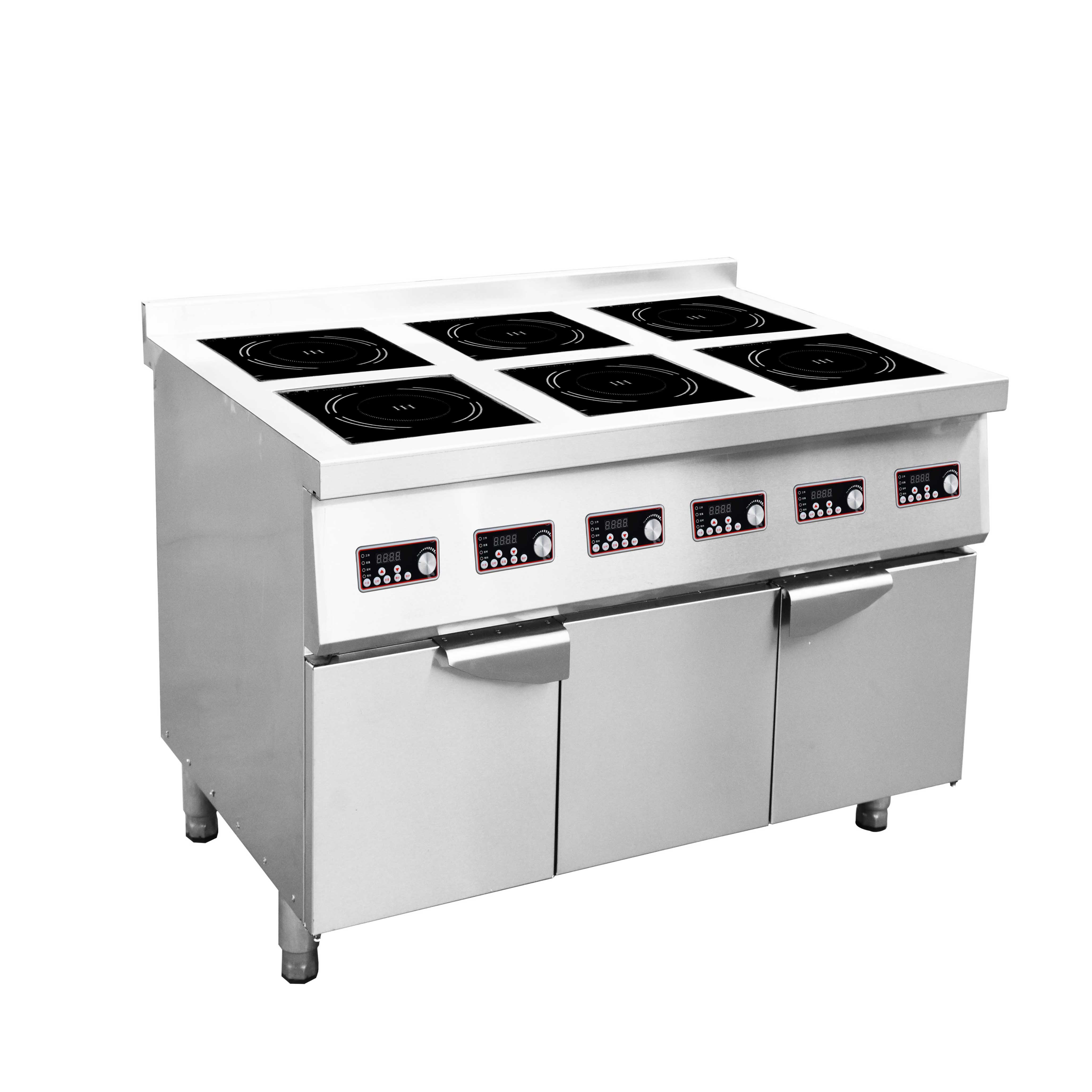
In the hustle and bustle of commercial kitchens today, being efficient isn’t just a bonus — it’s absolutely essential. That’s where a good Industrial Induction Cooktop really shines. Honestly, it’s a game-changer for any food service setup. Chef Alex Thompson, who’s pretty much a guru in culinary tech, always says, “Having the right equipment can totally transform your kitchen’s productivity.” So true, right?
These induction cooktops aren’t just about looking sleek; they offer super precise temperature control and heat up way faster than traditional stoves. That kind of efficiency can make a real difference in how smoothly a kitchen runs. Plus, they help tackle common issues like uneven heating and safety risks—because, let’s be honest, those can be real headaches. With induction, only the pan gets hot, so the surrounding area stays cool and safe—big win for everyone working there.
That said, it’s worth mentioning that these cooktops do come with a higher upfront cost. They might be pricier than your old-school options, at least at first glance. But when you think about the savings in energy bills and how much quicker they cook, the investment starts to make a lot of sense. Changing things up and adopting new tech can seem a little intimidating at first, but honestly, it’s about making smarter decisions in the long run. Embracing an industrial induction cooktop might just be the edge you need to stay ahead in this competitive industry.
In today's competitive business landscape, efficiency is key. Industrial induction cooktops offer a solution that can enhance productivity in commercial kitchens. According to a report by the International Energy Agency, induction cooking can be up to 50% more efficient than traditional gas or electric stoves. This efficiency translates directly into cost savings for businesses.
Moreover, safety is crucial in industrial settings. Induction cooktops heat pots directly while keeping the cooking surface cool. This significantly reduces the risk of burns and fires, making kitchens safer for staff. Research indicates that workplaces using induction Cooking Appliances report a 25% decline in kitchen accidents. These cooktops also minimize heat emissions, creating a more comfortable working environment.
Maintenance is another critical factor. Industrial Induction Cooking Appliances are generally easier to clean. The smooth surface allows for quick wipe-downs, saving valuable time. However, staff must be trained to use them properly, as improper use can lead to equipment issues. Regular training and feedback loops can ensure optimal operation. While induction cooktops present many benefits, they require careful consideration and investment.
When selecting an industrial induction cooktop, certain key features stand out. Power output is crucial. Many models offer between 3,000 to 10,000 watts. Higher wattage promotes faster cooking. This efficiency can significantly reduce wait times during busy services. A report by the National Restaurant Association highlights that speed is essential for maintaining customer satisfaction.
Safety features are equally important. Look for models with automatic shut-off and temperature controls. These prevent overheating and reduce risks in busy kitchens. A study showed that kitchens with advanced safety measures saw a 30% decrease in incidents. This improvement enhances staff confidence and reduces downtime.
Tip: Always consider a cooktop's ease of cleaning. Many industrial models have smooth surfaces that resist spills. A clean work environment promotes better hygiene. Regular maintenance is also key. A simple wipe can prolong the equipment’s lifespan.
Remarkably, not all units handle heavy pans well. Some users report issues with larger cookware. Evaluating how specific cooktops manage various pot sizes can save unnecessary frustrations. Proper evaluation and understanding your operational needs can help avoid these pitfalls.
| Feature | Description | Benefits |
|---|---|---|
| Energy Efficiency | Induction cooktops use electromagnetic energy to heat cookware directly, resulting in less energy waste. | Lower utility bills and reduced carbon footprint. |
| Rapid Heating | Heats cookware quickly and evenly, allowing for precise temperature control. | Faster cooking times and improved food quality. |
| Safety Features | Includes features like automatic shut-off and surface cools down quickly to prevent burns. | Enhanced safety for kitchen staff, reducing accident risks. |
| Compact Design | Typically sleek and space-saving, fitting well in any commercial kitchen layout. | Maximizes kitchen space and flexibility in layout planning. |
| Durability | Built with robust materials designed to withstand heavy use in a commercial environment. | Longer lifespan and lower maintenance costs. |
When it comes to energy efficiency, induction cooktop technology excels. An Induction Cooker Industrial can heat pots and pans directly. Traditional methods waste energy by heating the air around the cookware. This means less energy consumption and lower electricity bills.
However, transitioning to induction cooking requires consideration. Staff training might be necessary. Not all cooks are familiar with induction methods. A learning curve exists. But with practice, efficiency can soar.
Tips: Invest in high-quality cookware designed for induction. It improves performance and cooking speed. Regular maintenance also ensures longevity. Check for compatibility when purchasing new items for the kitchen. Induction cooking is not just about green energy; it’s about optimizing your kitchen for sustainable practices.
Induction cooktops are transforming kitchens. They offer unique safety advantages, especially for restaurants. With rapid heating capabilities, these cooktops minimize the risk of burns. The surface remains cool to the touch, reducing the chance of accidents. This feature is crucial in a busy kitchen environment where every second counts.
Tips for a safer kitchen: always keep the area around the Industrial Induction Cooker clear. Avoid using fabric aprons that can catch fire. Train staff on emergency protocols related to electric equipment. Consider installing fire extinguishers nearby.
Another key aspect of induction cooktops is their energy efficiency. They heat only the cookware, not the surrounding air. This reduces the fire risk associated with traditional methods. Additionally, induction cooktops come with automatic shut-off features. This can prevent overheating and related injuries.
While induction cooktops are generally safe, they do require careful handling. Staff should be educated about induction technology. Misuse can lead to accidents or equipment damage. Regular checks and maintenance are essential for optimal performance.
When considering cooking methods for your business, the comparison between induction cooktops and traditional methods is crucial. Industrial induction cooktops have unique advantages. They offer precise temperature control, which enhances cooking consistency. This precision is especially beneficial in high-volume kitchens, where every second counts. Induction cooking generates heat directly in the cookware, leading to energy efficiency. In contrast, traditional stoves waste a lot of energy.
Moreover, safety is a significant factor. With an Industrial Induction Kadai, the surface remains cool to the touch, reducing the risk of burns. This is a notable improvement over gas and electric ranges, where hot surfaces can pose dangers. However, it's worth noting some users may find the transition from traditional cooking methods challenging at first. It takes time to adapt to new equipment and techniques.
Cleaning is another area where induction shines. The smooth surface of an induction cooktop makes spills easy to wipe away. Traditional cooking surfaces often have crevices that trap food particles, complicating maintenance. While some chefs prefer the "feel" of gas flames, the benefits of induction cooktops can't be ignored. They represent a modern, efficient choice for any serious culinary establishment.
When evaluating cost-effectiveness in commercial kitchens, induction cooktops stand out compared to traditional gas options. Industry reports indicate that induction cooking can achieve approximately 90% energy efficiency, while gas ranges typically operate at about 40-55% efficiency. This means that every dollar spent on energy yields more usable heat in an induction system.
Over time, the savings add up. A study by the U.S. Department of Energy highlighted that switching to induction cooktops could save businesses around 30% in energy costs annually. This substantial reduction benefits both operational budgets and environmental footprints. However, upfront costs for induction systems may be higher, raising concerns for some operators.
Maintenance costs also factor in. Induction cooktops require less cleaning and minimal servicing compared to gas units. Gas ranges often suffer from more frequent repairs due to burner issues and gas line maintenance. A well-maintained induction unit can ultimately provide long-term savings that offset initial investments, but it also requires a learning curve. Staff training is essential, and some chefs may be hesitant to abandon traditional methods.
Balancing these factors is critical in making an informed choice.
Industrial induction cooktops are gaining popularity in professional kitchens. Their easy maintenance and cleaning features are significant advantages for businesses. Unlike traditional cooktops, induction cooktops heat food directly. This means spills and splatters do not burn on the surface, making clean-up straightforward.
Regular cleaning can further extend the life of your cooktop. Use a soft cloth for routine wiping. For tougher stains, a gentle scrubber is effective. Avoid harsh chemicals as they can damage the surface. The absence of grates and burners means fewer parts to disassemble and clean, saving time and effort in a busy kitchen.
Here are a few tips for optimal maintenance:
In modern kitchens, efficiency and versatility are paramount, and induction tilting automatic boiling pans are revolutionizing the way culinary professionals approach their craft. These innovative devices are designed to perform multiple cooking functions—baking, frying, grilling, steaming, and braising—all within a single unit. According to industry reports, kitchens that integrate multifunctional equipment experience up to a 30% increase in space utilization, allowing chefs to maximize their work environment and streamline operations.
The user-friendly design of induction tilting boiling pans enhances culinary efficiency through advanced technology. With a capacitive touch screen control panel featuring slide operation, they mimic the intuitive interfaces of smartphones and tablets. This design choice leads to precise and convenient settings that optimize cooking processes. Research indicates that equipment that simplifies operation can reduce training time for kitchen staff by as much as 25%, empowering them with the tools necessary for exceptional performance without extensive onboarding.
Moreover, the durability of these automatic boiling pans ensures long-term investment value for culinary establishments. By minimizing energy consumption while providing rapid heating capabilities, they contribute to sustainable kitchen practices. As the culinary landscape continues to evolve, leveraging technology like induction tilting boiling pans will not only enhance cooking quality but also adapt to the growing demand for efficiency and eco-consciousness in food preparation.
: Induction cooktops heat pots directly, reducing energy consumption and lowering electricity bills.
Yes, staff training may be needed. Not all cooks are familiar with induction cooking methods.
Invest in high-quality, induction-compatible cookware. Check compatibility before purchase.
They heat quickly and keep surfaces cool, reducing burn risk in busy kitchens.
Keep the area around cooktops clear. Avoid fire-catching materials near the cooktop.
They heat only cookware, not surrounding air, and have automatic shut-off features.
Staff must understand induction technology to prevent misuse and reduce accident risks.
Yes, regular checks can enhance performance and safety over time.
Transitioning requires some adaptation, which can be challenging but worthwhile with practice.
While generally safe, misuse can lead to accidents, making education essential.
Industrial induction cooktops are becoming increasingly popular in commercial kitchens due to their numerous benefits. They offer enhanced energy efficiency and sustainability compared to traditional gas cooktops, significantly reducing energy costs while minimizing environmental impact. The key features to look for in an industrial induction cooktop include rapid heating capabilities, precise temperature control, and safety features that protect both users and kitchens.
Additionally, the safety advantages of induction cooking cannot be overlooked, as these cooktops reduce the risk of burns and fire hazards. Their cost-effectiveness over time, combined with easy maintenance and cleaning, make industrial induction cooktops an ideal choice for businesses looking to optimize their cooking processes while ensuring a safe and efficient kitchen environment. Overall, the transition to induction cooking is a sound investment for any forward-thinking commercial establishment.