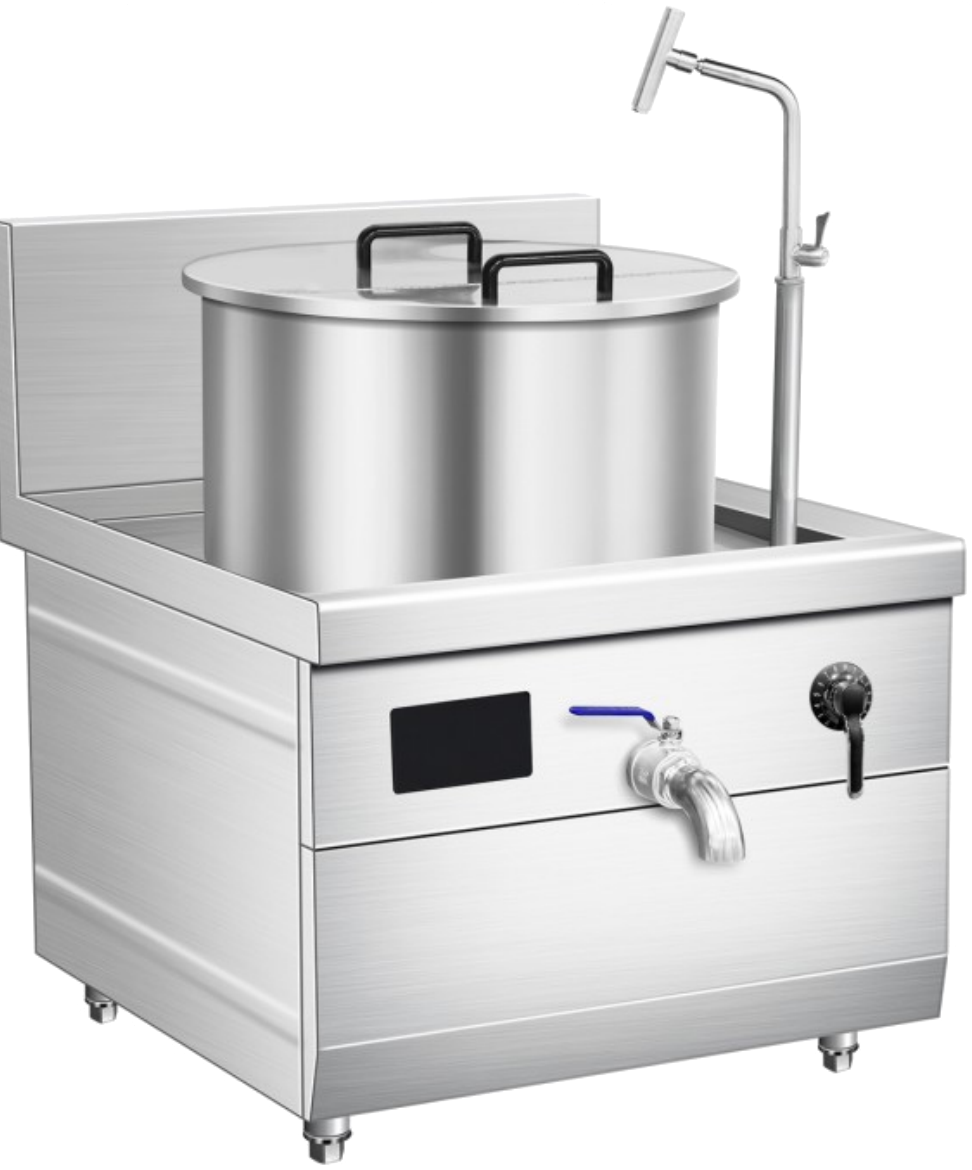
Large-capacity induction stock pots support stocks, soups, sauces, water-based cooking and other production-kitchen tasks. The useful specification is not simply the largest vessel that fits the floor. It is the vessel and heating system that fit the batch process, operator workflow and utilities.
UCOOK lists integrated stock cooker options from 135 to 410 litres for project comparison. These are nominal equipment references, not promises of usable batch volume or production output. Final selection remains application-specific.
1. Define the batch before choosing litres
Record one representative recipe from loading to discharge. Include the ingredient state, liquid level, expansion or foaming risk, temperature stages, additions during cooking, hold period and destination after the batch.
- Usable product volume per batch
- Number and timing of batches in the production window
- Starting condition and required cooking stages
- Required headspace for stirring, expansion or foam
- Receiving container, pump, trolley or other transfer method
Nominal vessel volume should not be treated as usable fill volume. Product behavior, operator access and the approved operating method determine the working level.
2. Match the vessel to the food process
| Decision area | Fixed integrated stock pot | Tilting boiling pan or kettle |
|---|---|---|
| Typical starting point | Liquid products that can be removed through an approved outlet or transfer process | Products or workflows that benefit from controlled vessel tilting |
| Discharge planning | Confirm outlet suitability, receiving height and safe flow control | Confirm tilt path, receiving position, floor clearance and operator zone |
| Cleaning planning | Review access to the vessel, outlet and surrounding work area | Review the cleaning position, tilt mechanism and liquid management |
| Project question | Can the real product leave the vessel through the intended transfer route? | Does tilting improve handling without creating a new space or safety conflict? |
This table is a selection framework, not a universal operating instruction. Thick, particulate or sensitive products need an application review before the discharge and vessel configuration are confirmed.
3. Review the capacity and power together
The integrated stock cooker range provides project reference points from 135 litres at 12 kW to 410 litres at 30 kW, using 380 V configurations shown on the current product page. The power and vessel steps are model references, not guaranteed heat-up times.
Actual production depends on the starting temperature, ingredient load, vessel geometry, recipe stages, lid use, kitchen conditions and confirmed electrical supply. A project contractor should compare the required batch window with the site load schedule before selecting a model.
4. Plan discharge, filling and cleaning as one workflow
Map where ingredients arrive, how liquid is added, where operators stand, how the batch is checked and where the finished product goes. The outlet or tilt direction, receiving container and floor drainage must work together without forcing staff to cross a hot or congested zone.
- Water point and hose or faucet reach
- Outlet type, product suitability and receiving height
- Clearance for lids, utensils and inspection
- Drainage and wash-down boundaries
- Access to surfaces that require routine cleaning
- Service access that does not block the production line
5. Confirm the site and project interfaces
Provide the country and confirmed voltage, phase and frequency. Also show the proposed position, access route, adjacent benches, water and drainage points, extraction or ventilation plan where applicable, and the party responsible for final connection.
For a new production kitchen, compare the stock pot with the wider high-volume batch-cooking workflow. Preparation, cooking, holding, transfer, rapid cooling where required and cleaning can each become the true capacity limit.
6. Build a quotation brief that can be engineered
Distributors and project contractors should send a simple process sketch, representative recipe, batch requirement, available utilities and layout. State whether the first preference is a fixed stock cooker, a tilting boiling pan or an open comparison.
Frequently asked questions
How should a buyer choose the capacity of a commercial induction stock pot?
Start with usable batch volume, ingredient expansion, safe working headspace, batch frequency and the receiving or storage process. Nominal vessel volume alone does not define practical production capacity.
When is a fixed stock pot cooker more suitable than a tilting boiling pan?
A fixed cooker can suit liquid products that move through an appropriate outlet or controlled transfer process. A tilting pan may be preferable when the product, cleaning method or discharge workflow requires the vessel to tip. The actual food and handling process should decide.
Does higher induction power always reduce production time?
No. The vessel, batch size, starting temperature, recipe stages, heat losses, electrical supply and operating limits must be reviewed together. A larger power number is not a guaranteed cycle-time result.
What should be included in a stock pot cooker RFQ?
Share the product or recipe, batch volume and frequency, starting and target conditions, vessel preference, discharge and cleaning method, country, voltage, phase, frequency, quantity, layout and target date.
Start with the batch record and transfer route. UCOOK can then review the vessel, heating reference, utilities and equipment layout as one project decision.